Description
How the bull put spread is built
A bull put spread consists of one short put and one long put at a lower strike, both with the same expiration. Since the short put is worth more than the protective long put, the trade opens for a net credit.
That is exactly why the structure is bullish: the ideal outcome is that price stays above the short-put strike. In that case both puts expire worthless and the full credit remains as profit.
If the market drops hard, the long put limits the damage. That makes the bull put spread one of the cleanest ways to express a bullish view with defined risk.
In practice, credit spreads are often opened around 45 DTE and then actively managed. On the S&P 500, a window of 30 to 45 DTE has proven especially interesting.
P/L diagram
Above the short-put strike the maximum gain is retained, between the strikes profit starts to erode, and below the long put the maximum loss is reached.
Backtest on the S&P 500
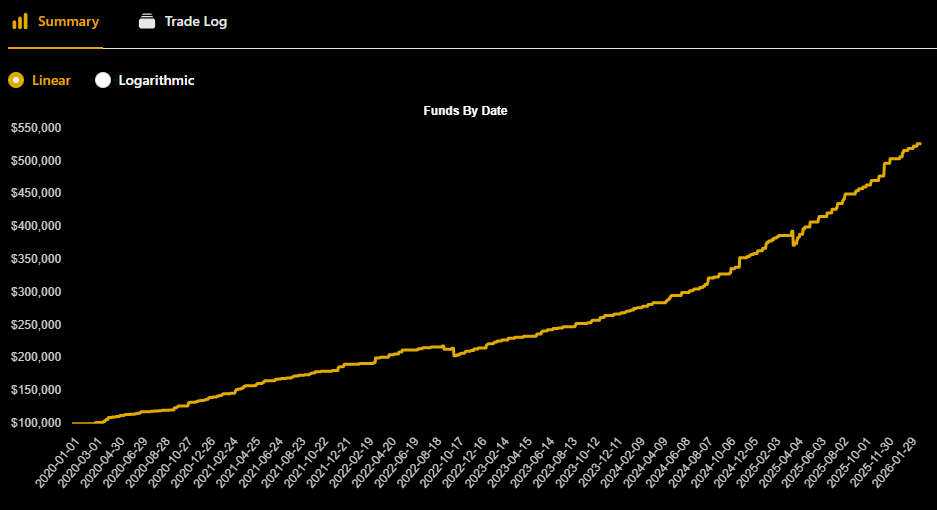
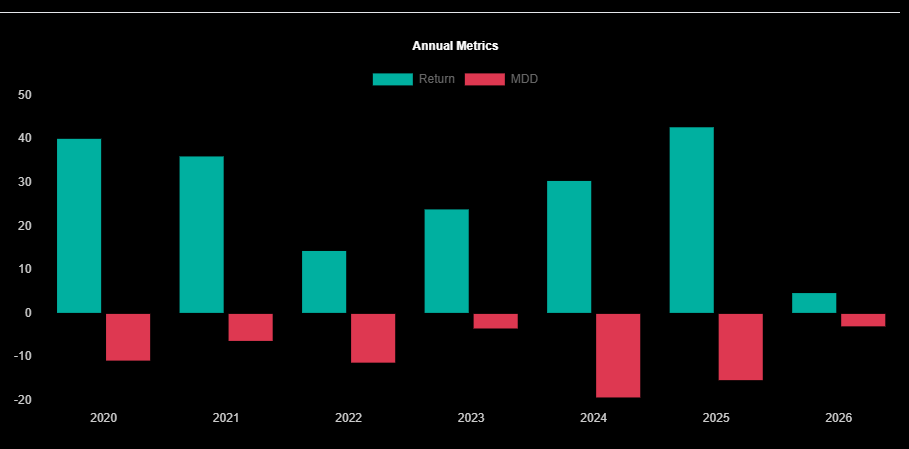
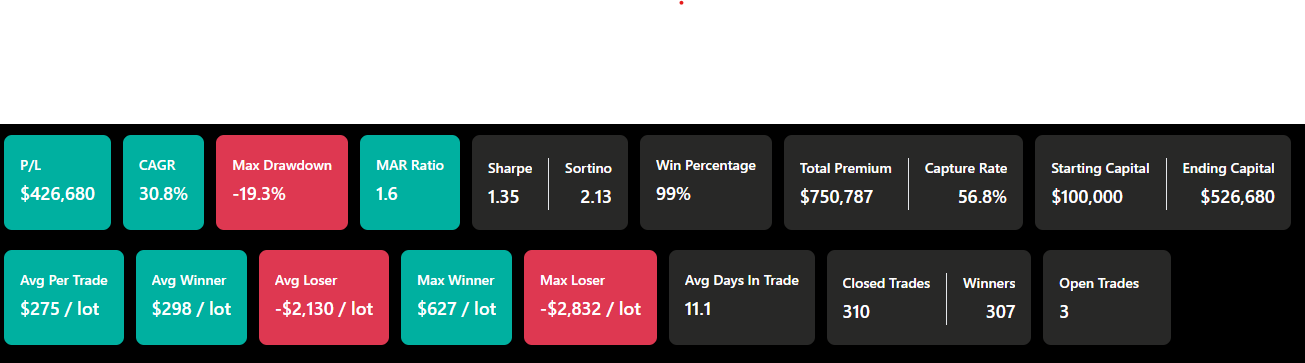
A long-term Option Omega backtest over the last 5 years shows how robust this simple structure has been on the S&P 500. Even the Covid crash barely dominates the equity curve, drawdown stays low, and the strategy still finished positive in the 2022 bear market and around the outbreak of the Ukraine war.